

Before the snap, Peyton Manning often appeared to be processing everything.
He pointed at linebackers. He changed protections. He moved receivers. He studied the secondary until the final second, then delivered the football before the defense seemed to understand what had happened.
But one of the concepts used by Manning’s record-setting 2013 Denver Broncos was surprisingly simple.
It was called Hank, a mirrored Curl-Flat concept with an additional route over the middle. Manning would identify the better side, watch the defender responsible for the flat, and make a basic choice. If that defender widened, the curl opened behind him. If he stayed inside, the flat became available.
A defense of eleven players had been reduced to the movement of one.
That is the central idea behind the Flat-Read family. Curl-Flat, Slant-Flat, Snag, and Stick may appear to be different football passing concepts, but they ask the quarterback to solve essentially the same problem.
The routes change. The formations change. The read remains the same.
What Is the Flat-Read Family?
The Flat-Read family is a collection of football passing concepts designed to place the flat defender in conflict.
One receiver attacks the short outside area of the field. Another finds space inside or behind the defender responsible for covering it. The quarterback watches that defender and throws to the route he leaves open.
The basic rule is idiot-simple.
“If the defender widens, throw inside. If he stays inside, throw outside.”

The most common members of the family include:
- Curl-Flat
- Stick
- Snag
- Slant-Flat
On paper, these can look like four separate plays. To the quarterback, they are four versions of the same decision. The distinction matters. A player who memorizes four plays must recall four sets of instructions. A player who understands the read recognizes a recurring pattern.
That is the difference between knowing the playbook and beginning to understand football.
Where the Flat-Read Family Took Hold
No single coach invented the Flat-Read family. It developed as passing offenses became increasingly organized around timing, spacing, and repeatable quarterback decisions.
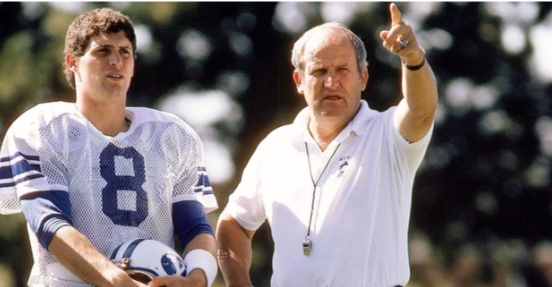
LaVell Edwards helped advance that philosophy at BYU. His passing systems were built to take what defenses offered, protect the quarterback, and create clear answers without burying players beneath unnecessary complexity. That approach influenced generations of coaches who came afterward, including many of the architects of modern spread football.
The broader insight was simple: an offense did not need hundreds of unrelated plays to appear multiple. It could present a smaller number of ideas through different formations, personnel groups, motions, and route adjustments.
Peyton Manning’s use of Hank decades later demonstrated the same principle at the highest level. Denver could change the presentation while preserving the quarterback’s underlying thought process.
This is why Flat-Read concepts have endured. They do not depend on one formation, one offensive system, or one generation of coaches. They depend on a conflict that every defense must eventually solve.
Someone has to cover the flat.
How the Curl-Flat Concept Works
The Curl-Flat concept is the clearest place to begin.
The outside receiver runs a curl route, usually breaking back toward the quarterback at approximately 10 to 12 yards. An inside receiver, tight end, or running back releases toward the flat.
Together, the two football routes stretch the flat defender horizontally and vertically.
If the defender expands toward the sideline, he creates a throwing window for the curl behind him. If he settles underneath the curl, the quarterback delivers the ball to the flat.
The brilliance is not in either route by itself. It is in the relationship between them.
The flat route moves the defender. The curl occupies the space he abandons. Each route makes the other more effective.
Football Lab diagram: Curl-Flat Concept
With Football Lab, coaches can animate the Curl-Flat concept and show players how the window develops over time. Instead of seeing two arrows on a static page, the quarterback can watch the defender become trapped between them.
Build and animate the concept in Football Lab
Why the Flat Route Creates Easy Completions
The flat route is rarely spectacular. That is part of its value.
It creates a short throw, gives the quarterback an immediate outlet, and forces an underneath defender to move toward the sideline. Even when the ball is not thrown to the flat, the route changes the geometry of the defense.
This is why the flat route appears in so many football passing concepts. It creates width quickly, and width creates space.
A defender who widens cannot simultaneously protect the curl window behind him. A defender who stays inside cannot prevent the offense from taking an easy completion outside.
The offense is not trying to trick him. It is giving him two responsibilities and enough time to perform only one.
For young quarterbacks, that produces something every coach wants: a visible answer.
Common Flat-Read Variations
Once a quarterback understands Curl-Flat, the offense can begin changing the inside route without changing the basic read.
Slant-Flat
Slant-Flat replaces the curl with a quick inside-breaking route.
The timing is faster, but the conflict remains the same. If the flat defender expands, the quarterback throws the slant into the space he vacated. If the defender stays inside, the ball goes to the flat.
Snag
Snag uses a short sit route, sometimes called a spot or mini-curl, paired with a route into the flat.
The snag receiver finds open grass while the flat route pulls the underneath defender toward the sideline. The spacing looks different, but the quarterback is still watching the same area of the field.
Stick
Stick pairs a five-yard stick route with a flat or arrow route. The stick receiver settles against zone coverage and can break away from leverage against man coverage.
Again, the defender must choose.
Stick deserves its own deeper examination because it has become one of the defining quick-game concepts in modern football. Read our guide to the Stick concept.
Different routes. Different timing. Same underlying question.
Why Coaches Teach Read Families
The Flat-Read family reveals something important about how players learn.
When Curl-Flat, Slant-Flat, Snag, and Stick are installed as unrelated plays, every variation feels new. When they are taught as members of one family, the quarterback begins seeing the pattern underneath them.
This reduces the amount of information the player must process without reducing the offense’s flexibility.
The team can shift formations, move personnel, add motion, or change the route inside. To the defense, the presentation looks different. To the quarterback, the decision remains recognizable.
That is the larger shift explored in Designing Plays Is Easy. But Your Players Might Be Missing the Concept. Plays tell athletes where to go. Concepts help them understand what is happening.
The goal is not simply to remember more football routes. It is to recognize problems faster.
The Flat-Read Family Is Rarely Alone
A complete passing game attacks defenders in different ways.
The Mesh concept creates horizontal stress through crossing routes and changing leverage.
The Flood concept layers routes at three depths on the same side of the field.
Flat-Read concepts isolate an underneath defender and force him to choose between width and depth. Together, these ideas give coaches multiple ways to create conflict without filling the playbook with disconnected assignments.
The best offenses are not necessarily the ones with the most plays. They are the ones whose players see the relationships between them.
Explore Flat-Read Concepts in Football Lab
A diagram can explain one version of Curl-Flat. A library of community plays can reveal the family.
Inside the Football Lab Community Library, coaches can explore how other users present Curl-Flat, Slant-Flat, Snag, Stick, and related concepts from different formations and personnel groups.
That variety is useful because it separates the concept from the play.
Players begin to see that the formation is only the wrapper. Underneath it, the quarterback is still reading the flat defender and throwing to the space he leaves behind.
Explore plays in the Football Lab Community Library
Football Lab also allows coaches to organize these variations in a digital playbook, animate route timing, share concepts before practice, and build a consistent teaching language across the entire staff.
The objective is not to give players more diagrams to memorize.
It is to help them recognize the answer sooner.
Start building your Football Lab playbook
Q&A
What is a flat route in football?
A flat route is a short route that attacks the outside area near the line of scrimmage. It is commonly run by a running back, tight end, or slot receiver and gives the quarterback a quick throwing option near the sideline.
What is the Curl-Flat concept?
The Curl-Flat concept pairs a curl route with a flat route to create a two-on-one conflict against the flat defender. If the defender widens, the quarterback throws the curl. If the defender stays inside, the quarterback throws the flat.
What is the Flat-Read family?
The Flat-Read family is a group of football passing concepts that ask the quarterback to read the defender responsible for the flat. Common examples include Curl-Flat, Slant-Flat, Snag, and Stick.
What is the difference between a flat route and a Flat-Read concept?
The flat route is one individual route. A Flat-Read concept combines the flat route with another route to create a defender-based quarterback read.
How does a quarterback read the flat defender?
The quarterback watches whether the defender expands toward the flat route or remains inside. The simplest coaching rule is: if he widens, throw inside; if he stays inside, throw outside.
Why is the Flat-Read family effective for youth football?
It gives young quarterbacks one clear defender to read and allows coaches to repeat the same decision across multiple concepts. This builds confidence while helping players understand how football routes work together.